Essay Tools on Budget
Sunset Planning When a Nonprofit Tool Is Discontinued
Nonprofits must plan tool transitions before vendors announce discontinuations.
A nonprofit tool sunset is an operational transition. The organizations that come through intact treat it as a structured process, moving from dependency mapping and data extraction to tool selection, migration, and staff adoption. The aim is to keep mission-critical work running while moving records before access ends and building a foundation that is easier to maintain.
Why nonprofit tool discontinuations are accelerating and what makes them structurally dangerous
A tool can remain useful to nonprofits while losing its place in a vendor’s plans. Microsoft’s Fundraising and Engagement launched in October 2020, yet its retirement announcement came in July 2024, with support ending December 31, 2026. Creative West discontinued CVSuite™ effective December 31, 2025, after a decade-plus of serving government, nonprofit, and advocacy organizations. Creative West framed the decision as a strategic refocus. The shared logic is that vendors redirect resources toward higher-priority offerings even when customers still need the retiring tool.
That creates a risk that a product’s usefulness cannot predict. Over years of use, a vendor relationship becomes infrastructure, holding not only records but also the routines through which staff do their work. Replacing it therefore means more than finding similar software. It means preserving the processes that have grown around it, including those nobody has documented. The most exposed organizations are those with the least visibility into what they depend on.
How notification failures turn manageable transitions into data emergencies
Microsoft’s retirement announcement gave Fundraising and Engagement customers an end date, but that date does not tell each organization what work it must do. Creative West’s farewell notice pointed CVSuite users toward NASAA’s State Arts and Cultural Production visualizations and the National Endowment for the Arts’ Arts Indicators Project. It did not offer a structured migration path.
The gap is therefore about accountability as much as notice. Someone inside the nonprofit must work out what the announcement means for its records, integrations, the work staff do, and the reports it must provide. As the remaining window shrinks, work that could have been sequenced becomes urgent, especially when continued access and data retrieval have different deadlines. Internal monitoring cannot prevent a vendor’s decision, but it can keep the organization from depending on a single email to begin understanding its exposure.
Building an internal early-warning system before a discontinuation is announced
Early warning begins with a living tool inventory. A shared document can record every tool in use, the data it holds, the tools it connects to, its internal owner, and its renewal or dependency timeline. One person should be in charge of that document and have it reviewed at least once a year, in line with budget or renewal cycles. This makes monitoring achievable for a lean team whose members already wear several hats. It also reduces the chance that a staff departure becomes the first occasion to discover an undocumented integration.
Relevant vendor signals include an acquisition, a move away from nonprofit pricing, an end to active feature development, or documentation that begins describing support as “legacy”. Microsoft’s Fundraising and Engagement announcement ended further development, so customers needed to track when development stopped as well as when support would end. These signals are reasons to examine a dependency. The useful habit is to connect changes in vendor direction to a current record of what the organization would need to protect.
Mapping dependencies and data before extraction begins
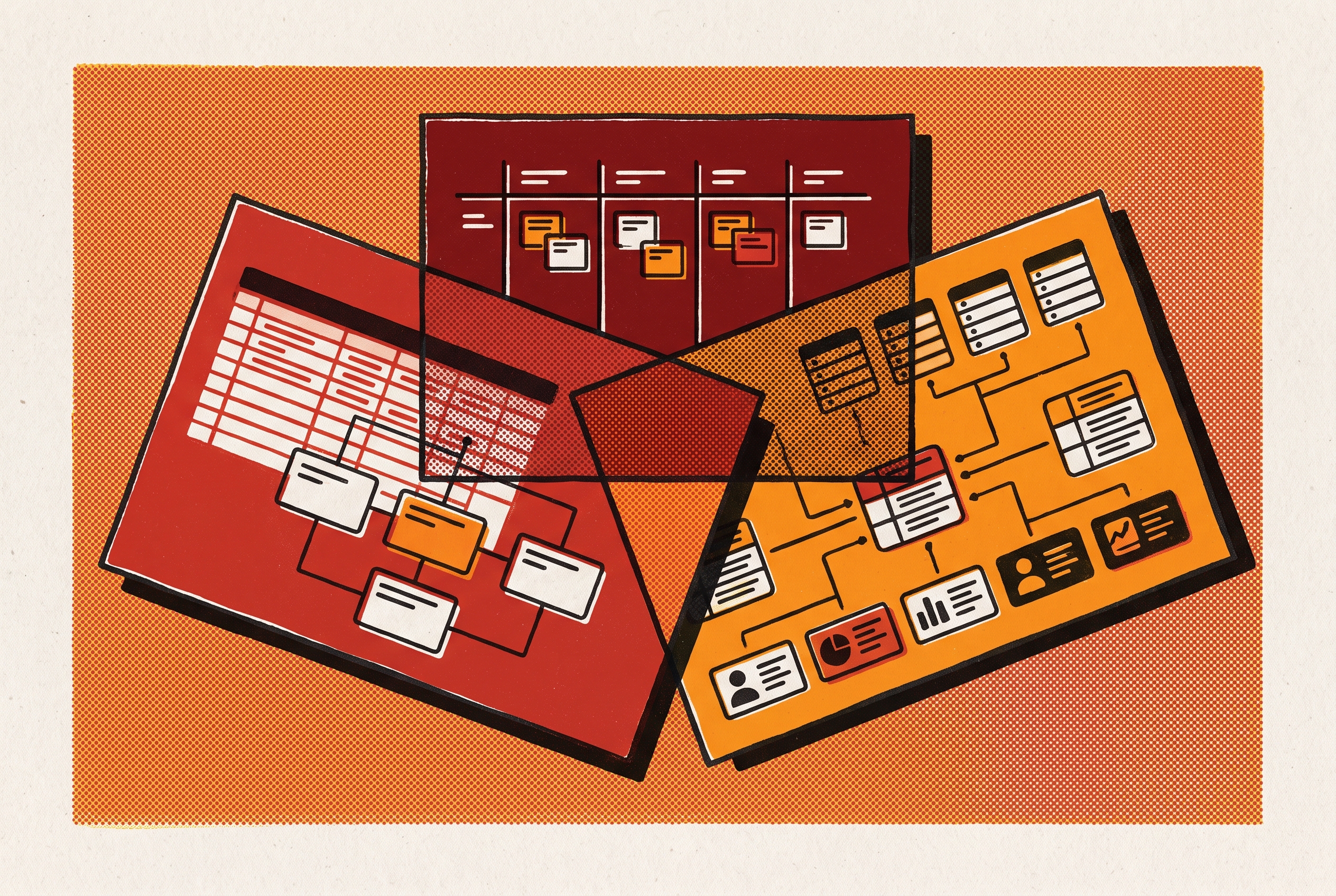
Once a discontinuation is confirmed, the inventory needs to become a detailed dependency map. The first step is to identify the records in the system, their structure, and the formats available for export. Then trace the integrations, including API connections, CSV uploads, and manual entry between tools. Map the staff workflows that rely on the interface or its outputs, especially reports and dashboards used for decisions. Finally, identify grant, audit, and regulatory requirements, including the records that must be retained and the retention obligations attached to them.
Named replacements do not remove the need for this work. Microsoft’s Fundraising and Engagement was built on Dynamics and connected to the broader Microsoft ecosystem. Options such as MissionCRM, Barhead, and mhance do not automatically inherit an organization’s existing data models or automations. Similarly, CVSuite supported work to “analyze trends, advocate for the arts, and demonstrate the impact of the creative sector”. Where those outputs feed funder reports, board presentations, or grant applications, a data export alone cannot preserve the whole workflow. Mapping those uses first keeps an overlooked process or compliance obligation from surfacing halfway through migration.
Extracting and prioritizing data before the export window closes
With the map complete, extraction can follow a clear sequence. Establish the relevant access and retrieval deadlines before scheduling the work, because vendor timelines do not adjust to organizational readiness. The Microsoft 365 discontinuation timeline, separate from the Fundraising and Engagement support deadline, illustrates the distinction, with a 30-day grace period for access after grant expiry, followed by a 60-day window for data retrieval, then deletion. A plan must use the timeline for the affected service rather than assume that all Microsoft changes follow the same rules.
Export contact and constituent records with unique identifiers first, because those identifiers anchor the records that follow. Next come transactional history, including gifts, grants received, grant reporting dates, and compliance records. Preserve recurring or pledged commitments after that, followed by relationship structures such as household links, soft credits, tribute designations, and organizational affiliations. Then capture custom fields and tags that hold knowledge the standard records leave out. Notes, attachments, and past email threads can come last or be archived separately, unless the dependency map shows a retention requirement that moves them up the list.
Before the full export, remove duplicates, correct malformed records, and resolve unmapped fields. For grant-tracking systems, check how deadline calendars and compliance documentation will export, since they may not fit a generic export. Then run a representative test export. Validate it against known record counts and financial totals so that the comparison reveals structural problems in the test export before the full migration pull.
That creates a risk that a product’s usefulness cannot predict.
Evaluating replacement tools against actual operational requirements, not feature lists
The dependency map should now act as the filter for replacement tools. A candidate must import the actual data types being preserved, including custom fields, relationship structures, and compliance records. It must also connect to the other tools in use without quietly expanding the replacement project. Just as importantly, the staff who will use it must be able to maintain routine work. A tool that needs a dedicated administrator creates a different operational burden for a nonprofit without one.
Fundraising and Engagement illustrates why selection cannot reduce to a single successor. MissionCRM, Barhead, and mhance are third-party Dynamics-based options. EveryAction, Virtuous, Raiser's Edge, and ROI Solutions are fundraising-centric nonprofit CRMs. More specific fits include Altai for associations, AkoyaGo for foundations, and STRATUSLive for United Ways. These tools are grouped by the needs they meet, with no group ranked above another.
Instrumentl, GrantStation, Candid Foundation Directory, and GrantWatch are discovery options. Tracking and compliance options include Instrumentl at upper tiers, AmpliFund / Euna Grants, and Sage Intacct's grant tracking module. For nonprofits that re-grant, application-review options include Submittable, Foundant Grant Lifecycle Manager, Fluxx, SmartSimple, and Blackbaud Grantmaking. Compare tools based on the job the organization needs them to do.
Sometimes the answer also requires changing the workflow. Creative West’s direction toward non-commercial NASAA and NEA resources illustrates why a sunset may not have a direct commercial replacement. Once a suitable approach is identified, the cutover date must fit the work calendar as well as the vendor deadline. Avoid a fundraising or grant-management cutover in November–December, when donor acknowledgments, year-end giving campaigns, and grant reporting deadlines converge.
Running the migration without losing continuity of mission-critical workflows
Migration begins with import and field validation before staff start using the new system. Record counts and financial totals must reconcile, but matching totals do not prove that the system supports daily work. Staff should then do real tasks, including looking up a specific donor, running a report, and processing a gift. Pay particular attention to soft credits, tribute designations, pledges, recurring gift schedules, and custom fields. These hold details about relationships that can be lost or changed even when the basic records arrive.
A parallel-use period of two to four weeks gives staff time to validate work in both systems. Set and communicate the legacy cutoff date in advance, with no exceptions for indefinite continued use. Otherwise, dual entry becomes a competing source of records. Separate responsibility for understanding the data from responsibility for managing the technical process. The person who knows what must be preserved cannot substitute for the person who manages how it moves.
For a nonprofit without internal IT capacity, an engineering or implementation partner can own that technical workstream. Its scope should include reconciliation checkpoints, rollback capability if validation fails, and written sign-off criteria before decommissioning the legacy system. Those responsibilities belong in the plan from the start. Ownership must extend through staff validation and cutoff management, because operational continuity is the outcome, while a completed import is only one deliverable.
Managing staff adoption and the organizational knowledge that does not migrate automatically
Even a technically sound migration can fail in practice if staff cannot interpret what they see. The knowledge at risk includes where information lives, which shortcuts are dependable, and what a report’s output means. None of that necessarily appears in an export file. Consider a wrong recurring donor amount that goes unnoticed for a quarter because the staff member processing gifts has not learned where to check it in the new system. The records may have moved, but the organization has lost a working check on their accuracy.
Training must therefore begin before go-live, with the parallel-use period serving as the training period. Staff need the old system as a reference while learning to validate the new one. Otherwise, unfamiliar tasks can send them back to spreadsheets or lead them to build workarounds around features they have not learned. Where one person was the primary user, document which reports they ran, on what schedule, for what purpose, and which decisions those reports supported.
External communication is another part of adoption when the change affects donors, funders, or partners. Changes to acknowledgment timing, grant reporting schedules, or portal access need advance notice. Treating that communication as a parallel workstream keeps the transition from being defined solely by internal readiness.
Using the sunset as the moment to address the technical debt the old tool accumulated
The mapping and cleanup required for migration expose problems that predate the retirement notice. Duplicate records, orphaned custom fields, broken integrations, and reports nobody reads can linger because daily work leaves little time to look into them. A workaround becomes the process, and a field added for one grant becomes permanent. An undocumented integration can become load-bearing without anyone recording its role.
Treat cleanup as an investment in the new system. Moving dirty data into a different tool preserves the old problems under a new interface. Where the retiring system was an improvised Airtable database or a spreadsheet promoted to “the system”, the same review can define what production reliability now requires.
A long-term engineering partner can help sustain that work by monitoring, adjusting, and supporting staff as real use reveals gaps after migration. Its value lies in remaining responsible for helping the new foundation work. The organization then has clearer dependencies, a habit of monitoring tool health, and support that does not disappear at go-live.
Notes
- A Fond Farewell to Creative Vitality™ Suite - Creative West
Provided details about Creative West's discontinuation of CVSuite, its effective date, the communities it served, and the alternative resources (NASAA and NEA) it pointed users toward.