Essay Tech Governance
Why Nonprofits Need a Ranked Debt Assessment Before Any Engineering Studio Touches Their Stack
Identify your worst technical problems before hiring engineers to build new features.
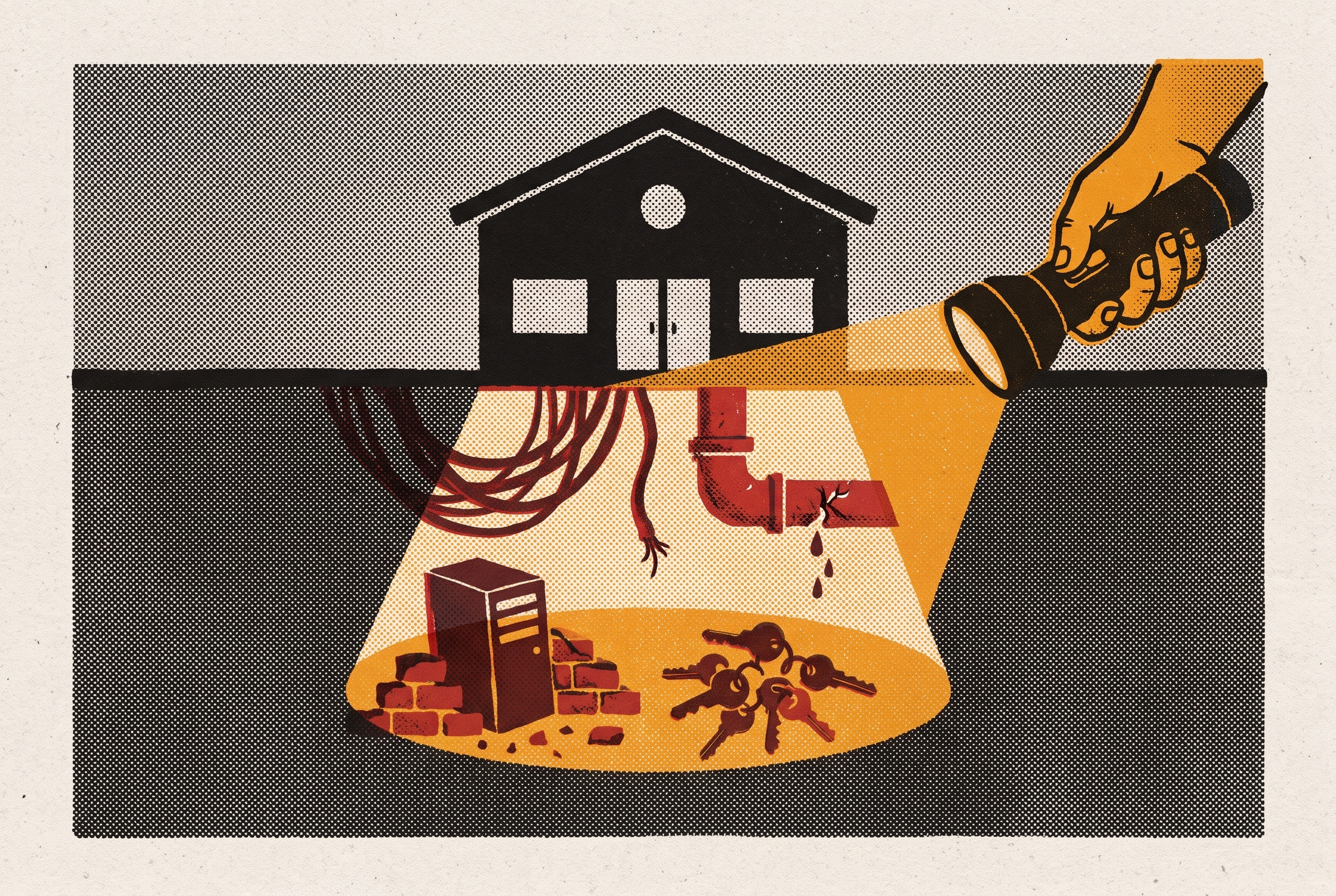
Before hiring an engineering partner, a nonprofit needs a ranked technical debt assessment that identifies what is broken, risky, or load-bearing and orders it by mission-criticality and remediation cost. That assessment should cover architecture, security, tests, infrastructure, and data dependencies, producing a scored register and lifecycle calendar. Without it, a studio can scope new features while leaving the most consequential weaknesses untouched.
Why nonprofits arrive at engineering studios with invisible debt
Nonprofits often build software to meet the next funding deadline rather than to last for the system’s full working life. A grant-driven build may need to demonstrate impact to a program officer, making a working demo the immediate goal and giving it priority over durability under production load. That is a rational response to a constraint. But when the next grant funds another capability rather than maintenance, the original shortcuts become the foundation for more work. Each addition makes the earlier decisions harder to unwind.
Staffing makes that accumulation harder to see clearly. When people wear several hats and no one owns the stack, manual workarounds can outlive the people who devised them. Spreadsheets become databases, Airtable bases become CRMs, and intake forms stand in for structured data pipelines. These tools become load-bearing without anyone choosing to design them for that role. Their role changes even when their design does not.
Cisco engineering executive Bhaskar Jayakrishnan calls technical debt a “hidden tax on mission delivery”. Staff pay that tax through slow systems, broken integrations, and manual workarounds that consume time meant for the mission. Jayakrishnan also describes technical debt as a systemic issue, because the parts are interconnected. A weak peripheral can expose more sensitive systems. Employees may know every awkward step in the workflow, but an outside engineering studio may never hear what they know.
What happens when an engineering studio starts work without a debt map
A feature can depend on a foundation that cannot support it, while the work needed to repair that foundation sits outside the agreed build. Neither side needs to have acted carelessly. The nonprofit may describe the desired result accurately without knowing which existing weaknesses will obstruct it. The studio may scope that result competently without receiving the information needed to question the foundation.
The gaps can be quite specific. They include absent multi-tenancy enforcement, hardcoded credentials, missing SSO or audit logs, and a single deployment environment without CI/CD or rollback. Unindexed queries, duplicated logic, and minimal test coverage create different problems again. These are not interchangeable cleanup tasks. Each has a different repair cost and a different consequence for the people relying on the service.
Security debt makes the stakes especially clear. Jayakrishnan notes that “In a modern threat landscape, attackers do not just target the core database; they exploit the weakest link at the periphery”. An unpatched mobile device or outdated field-reporting app can provide initial access for a multistage attack. When donor records, volunteer information, and financial data share an unaudited system, the risks include interrupted service, regulatory consequences, and harm to donor trust. Grant compliance and accessibility requirements can likewise become unplanned remediation work if they emerge only after the statement of work is signed.
Shouldn’t professional engineers discover these problems themselves? They may, but feature discovery and a debt audit serve different purposes. Discovery scoped to delivery defines the proposed work, while an audit examines what the client may not know to disclose.
What a ranked debt assessment actually is — and what separates it from an inventory list
An inventory records what exists in the stack. A ranked assessment decides what needs attention first, what needs protection while it remains in service, and what can wait. It weighs the risk to the mission against the cost of development. For a nonprofit, that means asking what a failure would interrupt for beneficiaries.
Jayakrishnan’s framework gives that work three named phases. Visibility and Stabilization inventories hardware, software versions, and interdependencies, including peripherals and applications connected to the network. Strategic Alignment categorizes assets by operational impact and risk, prioritizing systems that cannot be secured for replacement and applying compensating controls where systems must remain. Proactive Lifecycle Management establishes a staggered refresh plan that the organization can fund over time.
Classification connects the inventory to those decisions. Architecture debt consists of structural limits that constrain other changes, while security debt can become an incident or compliance problem. Test debt weakens confidence in changes, and infrastructure debt includes legacy environments and configuration drift. The categories help distinguish different remediation paths. A slow query and missing access controls should not compete for attention merely because both appear on the same backlog.
The assessment needs to score each item for both mission-criticality and remediation cost. What breaks for beneficiaries if it fails? What would fixing it require in time and engineering hours? A value-versus-difficulty matrix gives product and engineering teams a shared way to compare those answers. The resulting scored register should show the item, its debt type, severity, effort, and disposition, rather than leaving the reader to infer priority from a long description.
When people wear several hats and no one owns the stack, manual workarounds can outlive the people who devised them.
How the Airtable dependency exemplifies the sequencing problem
Airtable shows why classification must come before scoping. Nonprofits use it for donor CRM, program tracking, and grant reporting, but those functions have different data ownership, compliance, and access-control requirements. Treating every base as the same dependency can conceal which function needs to move first and which requirements should determine its destination.
Keeping Airtable as a production data layer also creates vendor lock-in debt. Per-user licensing costs grow with use, while the nonprofit does not own the underlying schema or data transport. So the assessment needs to give each use a migration priority before a studio scopes integrations around it. Otherwise, the new work may deepen dependence on a layer already due for replacement.
The available exit paths solve different problems. NocoDB is open-source and self-hostable, turning PostgreSQL, MySQL, SQL Server, or SQLite databases into a smart spreadsheet UI. It suits nonprofits with a technician on staff that want data ownership without per-user licensing fees. Baserow is also open-source and self-hostable, with a fit for GDPR-conscious teams and regulated organizations with EU data residency requirements.
Salesforce NPSP represents a different path for organizations with complex grant reporting obligations and funder-mandated enterprise-grade compliance reporting. The ten free licenses for new applicants are now granted as Nonprofit Cloud licenses in place of NPSP licenses. The products’ different cost and complexity profiles mean that selecting a path is part of architectural planning before integrations are built.
What does ranking actually produce here? Instead of an entry saying only “Airtable dependency”, the register identifies the function, its required controls, its migration priority, and its target path. The priority follows the mission risk and effort assessment. With that decision in hand, the studio can scope work that will still be of use after the next data migration.
Why grant timelines push nonprofits to skip the assessment — and why that pressure makes the cycle worse
A grant deadline can make an audit feel like a diversion from the promised result. Program officers want demonstrable software, and the funding schedule may leave little room for a discovery-first engagement. A nonprofit facing it has a reasonable question about whether assessment time will leave enough room to deliver.
Skipping diagnosis postpones the underlying work until new features depend on the unresolved foundations, creating the conditions for a second remediation engagement. The same funding rules that rewarded the first shortcut then reward another addition that funders can see. Meanwhile, maintenance is still hard to fund because it keeps things from breaking rather than showing off something new the software can do.
Isn’t it the studio’s job to diagnose the problems anyway? A specialist can do the technical investigation, but the nonprofit must still help judge the impact on its mission and decide whether the proposed scope meets its needs. It needs enough visibility to participate in that conversation. Otherwise, it has no basis for distinguishing a credible repair plan from a feature plan that leaves the risks intact.
Visibility, strategic alignment, and lifecycle planning can form a defined pre-engagement step with a usable deliverable. Its endpoint is the ranked map needed for responsible scoping. The assessment does not have to become a multi-week engagement simply because the stack has accumulated years of debt.
How do you audit your codebase before bringing on an outside development team?
For a nonprofit preparing that assessment, the first step is Visibility and Stabilization. Inventory the hardware, software versions, applications, peripherals, and their dependencies. Include the spreadsheets, Airtable bases, and manual workarounds on which the service depends. The inventory needs to make those connections visible before anyone assigns priorities.
Next, classify each finding by debt type. Architecture debt asks whether a structural choice constrains other changes, while security debt asks whether an item leaves an exposed entry point. Test debt concerns how safely the team can make changes and recover from them, and infrastructure debt includes legacy environments and configuration drift. This step gives each problem a remediation context. It also helps establish who should own the repair rather than treating the whole register as undifferentiated engineering work.
Then move into Strategic Alignment by rating severity and effort. For every item, ask what breaks for beneficiaries if it fails and what fixing it requires. High-severity, low-effort items should be fixed before the studio starts work. High-severity, high-effort items must be disclosed in the first scoping conversation so that they shape the proposed work. A difficult repair is not a reason to bury an urgent risk.
Within that sequence, classify Airtable and spreadsheet dependencies by function. Identify donor CRM, program tracking, and grant reporting uses, then determine their needs for data ownership, compliance reporting, and multi-user access control. Set a migration priority and target path before the studio scopes work on those bases. This is where the broader assessment becomes an architectural constraint. It tells the partner which foundations are available for new work and which are scheduled to change.
Finally, produce a one-page ranked output and lifecycle calendar. It should distinguish replacements, systems needing compensating controls, and work that can be deferred, with severity and effort supporting the order. Jayakrishnan calls the unified lifecycle calendar “the difference between a reactive organization and a proactive one”. The document also creates a record of what the studio was told before scoping. Known debt should become an explicit scope decision.
If no one internally can read a dependency graph or assess the technical risks, the procurement step should be a bounded technical audit before, and separate from, any build contract. That is a different purchase from feature delivery. A partner willing to conduct the assessment with the organization rather than jump straight to a build quote shows a willingness to understand the foundations.
What to look for in an engineering partner once the assessment is complete
With the map complete, the scoping conversation can test whether a studio understands the starting conditions. Does it propose a plan for the high-severity items, or simply work around them? Does it treat Airtable and spreadsheet dependencies as inputs to scope, or leave them outside its responsibility? A proposal that skips the highest-priority risks in favor of features reveals a delivery-first orientation. Discovering that mismatch before signing is more useful than discovering it during production.
Price alone cannot settle that comparison. A lower quote may leave the nonprofit’s long-term operating costs untouched, while a stronger proposal accounts for the foundations the new work needs. The relevant questions extend beyond launch. Does the partner commit to staying through production, and does it use the ranked register as a shared working document?
The agreed lifecycle calendar then becomes a baseline for accountability. Later scope decisions can be judged by how they address the risks and replacement needs found before development began, as well as by the features they deliver. That gives the nonprofit a clearer basis for evaluating both proposals and subsequent work. The assessment makes the right partner easier to recognize and the wrong fit easier to disqualify.
Notes
- Technical Debt Prioritization: State of the Art. A Systematic Literature Review
Supported the article's discussion of classifying technical debt by type and prioritizing items by severity and remediation cost.
- (PDF) A Systematic Literature Review on Technical Debt in Software Development: Types, Tools, and Concerns
Informed the article's classification of debt into architecture, security, test, and infrastructure categories and their distinct remediation contexts.
- The Cost of Standing Still: Understanding and Addressing Technical Debt in Your Association
Provided Bhaskar Jayakrishnan's framework and quotes on technical debt as a hidden tax, security risks at the periphery, and the lifecycle calendar concept.